What Font Was Used for Make America Great Again
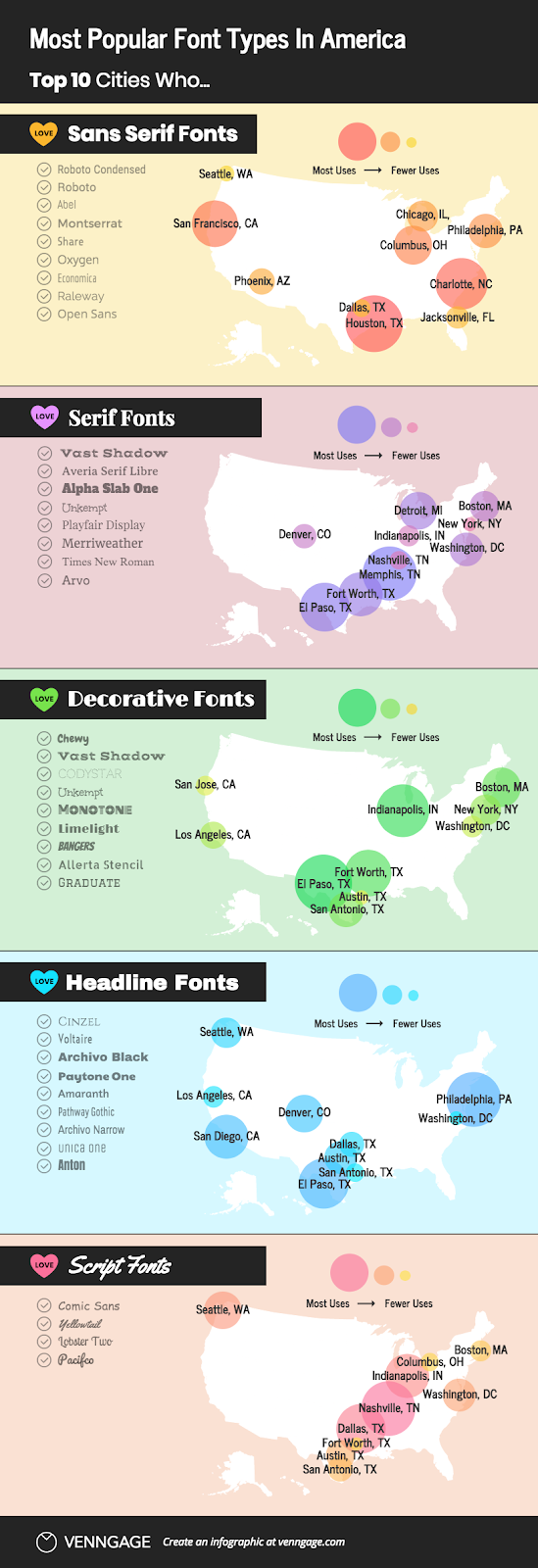
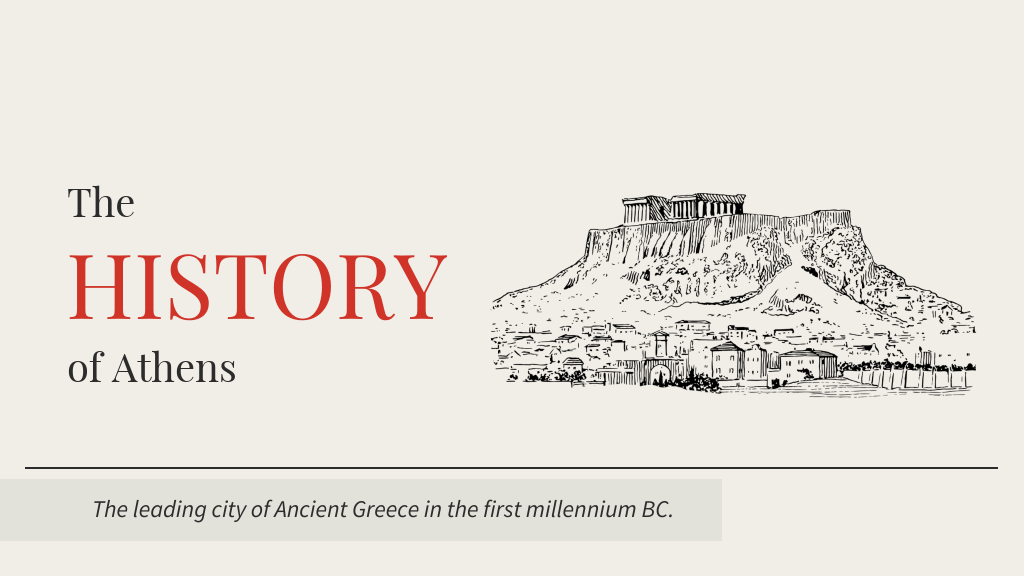
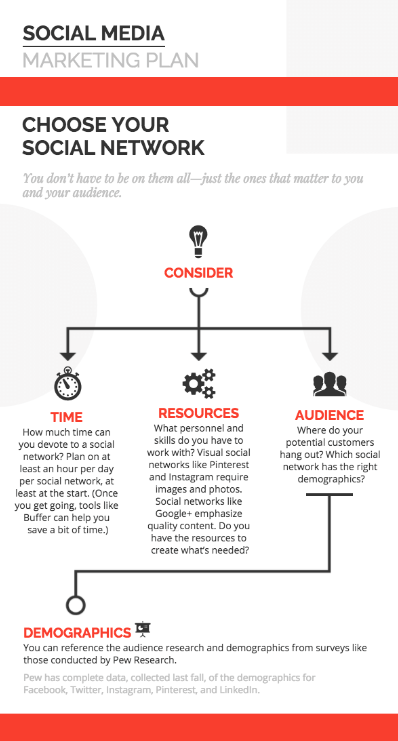
How much idea practice you put into the fonts you use for your visual content? According to a report nosotros conducted over at Venngage looking at the near popular font types in America, it might exist worth basing your font choice on where most of your audience is located. Nosotros analyzed the 50+ fonts we offer to come across which font types people favor, and how their preferences vary depending on location. Our analysis focused in on the top 25 most populated cities in America, since they're the ones creating the most content. Virtually fonts can be broken down into 5 distinct types: serif, sans serif, decorative, headline and script. This infographic summarizes our findings: Allow's go into what each font type is, and when you should utilise them in your visual content. A "serif" is a small line or embellishment added to the finish of a stroke in a letter. A serif font has serifs! Pretty easy to remember, correct? At that place are a lot of different fonts that fall into this category. Times New Roman is a archetype example. Merriweather and Playfair Display are other examples. Serif fonts have a more archetype feel than sans serif fonts often do. They're reminiscent of traditional print. With that in mind, whatsoever situation where you want to invoke traditional print would exist an appropriate fourth dimension to use a serif font. For example, if you were to create a poster for an arts event, or a writing course, a serif font similar Merriweather or Courier New would work well. Or if you were to create an infographic about a historical subject, a font resembling traditional typeface would give your blueprint a more than celebrated feel. Accept this presentation slide that uses Playfair Display for the championship: You might besides want to apply a serif font when you're highly-seasoned to a primarily southern cities. Fort Worth, TX, Memphis, MS and El Paso, TX all used more serif fonts than the rest of the land. Nostalgia runs pretty deep in the South -- mayhap that influences their font preferences? States that liked serif fonts the all-time on the whole are Delaware, Nebraska and Vermont. Delaware promotes itself as the "First Country", and that love of history might influence its residents' tastes in fonts. You lot can probably judge what sans serif fonts are. That's right…they're fonts without serifs. Fonts like Open up Sans, Arial and Oxygen. Sans serif fonts take a modernistic and efficient feel. They are likewise mostly idea to be easier to read than sans serif fonts, although legibility often really comes down to characteristics like weight and singled-out letter forms. Still, most sans serif fonts will be a pretty safe bet for narrow and low-resolution screens. That'due south role of why most websites and mobile apps utilise sans serif fonts, item for trunk text. Open up Sans, Roboto and Oxygen are a few popular choices (nosotros use Roboto and Open Sans at Venngage). What's more, the minimalist and efficient feel makes sans serif fonts makes them a prime choice for visual content dealing with mod topics like tech, innovation, and productivity. For example, this social media marketing infographic uses Raleway for the headers and Open Sans for the body text: Interestingly enough, cities that favor sans serif fonts are pretty spread out. Sans serif fonts are most popular in San Francisco, CA, which makes sense when yous consider how many tech companies are located there. They are are also very pop in Houston, TX (another tech hot spot) and Charlotte, NC. On the state level, sans serif fonts are well-nigh pop in Arkansas and Utah. Considering how Common salt Lake City is emerging as a tech hub rivalling Silicon Valley, you can meet how this mountain west state would appreciate modern sans serif fonts. Decorative fonts characteristically have plenty of embellishments and quirky themes. They're mostly used in small doses and sized large for headings, rather than used for torso text. These are different from headline fonts, which are more basic fonts that are typically used for headers and titles. Some examples of decorative fonts are Graduate, Bangers and Contrail Ane. Considering decorative fonts can be pretty out-there, they're generally non the best choice for body text. Instead, they are perfect for using in attention-grabbing headers. Infographics, blog headers, posters, and social media visuals are all perfect opportunities to utilise a creative decorative font. Look for a decorative font that reflects the theme or mood of your visual content. For instance, if yous're designing an infographic about the movie industry, writing the headers in Limelight tin can give your infographic a classic, retro feel. Decorative fonts are as well great for using in social media promotions where you want to become people excited about your brand. For example, this social media flyer uses Quicksand and Monoton for a fun feel: Decorative fonts are virtually popular in cities similar Indianapolis, IN, El Paso, TX and Boston, MA. On the state level, though, decorative fonts were by far most popular in Hawaii. That'south interesting when y'all consider how much tourism Hawaii gets per year--perhaps advertising campaigns are taking advantage of flashy fonts? Headline fonts are assuming, easy to read and full of character. They're like to decorative fonts but tend to exist less embellished. They're designed to be eye-catching and impactful. Archivo Black, Voltaire and Wine I are all examples of headline fonts. Whatever state of affairs where you want to grab people'due south attention is a good opportunity to use a headline font. Blog posts, reports and presentations are all places where yous are likely to want attention-grabbing headlines. Pair a bold headline font with body text in a sans serif font to ensure that your content is super legible (a lot of headline fonts happen to be sans serif fonts for that reason!). While headline fonts don't tend to be as out-there are decorative fonts, they nonetheless let y'all to add a fleck of flare to your design. For example, you lot could create a slide deck that combines titles in Arvos with body text in Dosis for a modernistic, easy to read presentation blueprint: Headlines fonts are well-nigh popular in Philadelphia, PA, which is funny when you lot consider that Philly has a reputation for being in-your-face. Simply Philly is also home to Comcast, one of America's biggest telecommunications conglomerates. Plus, The Philadelphia Inquirer is one of America's longest running newspapers. And then possibly Philly folks appreciate a bold headline. Interestingly, West Virginia likes headline fonts on the whole. Outside of that, western and midwestern states like Idaho, Nebraska and Montana like headline fonts all-time. Keep that in listen next time you create content to appeal to those regions! A lot of script fonts become a bad rep, but they deserve a place in your design repertoire. Script fonts resemble handwritten text. That means that they are not as clean-cut and easy to read as basic serif and sans serif fonts, only they definitely bring personality to your designs. Fonts like Lobster Two, Pacifico, and Yellowtail can all heighten your design when used sparingly. And maybe fifty-fifty ... Comic Sans (I'll leave that upwardly to you). The key to using script fonts in your designs is to utilise them scarcely. They should exist used to accent your content -- and should definitely not be used for body text. One place where script fonts won't look out of place is on a greeting card: Similarly, y'all could utilise a script font in an Instagram visual. Posters and infographics that focus on lifestyle topics similar baking or dwelling house decor could also make skilful use of a playful script font. Script fonts can give your blueprint an inviting and personal experience. For example, you lot might desire to use a script font for the headline in an education poster. Or take this nonprofit entrada poster, which uses Unkempt for the header to make the message inviting. No i urban center outranked the rest in its apply of script fonts. Nashville, TN topped the list, followed closely by Dallas, TX. Perhaps a connection can exist found in the frequent use of Gothic script fonts in typing out religious quotes, since southern states are generally the most religious. The tendency carries into the country level. Nevada tops the list, but information technology'due south followed closely past West Virginia, Vermont and South Carolina. While it'due south good to have at least an idea of what your target audience likes, yous will have to find what they respond to best through trial and mistake. Perhaps more of import than putting likewise much stock into what fonts your audience will similar is picking fonts that fit your brand. Pick fonts that help embody your make's personality and message and incorporate those into your visual content. After all, cohesive pattern is an important part of edifice brand awareness! 
Serif Fonts

When should y'all utilise serif fonts?
Sans Serif Fonts
When Should Y'all Use Sans Serif Fonts?
Decorative Fonts

When should you utilise decorative fonts?

Headline Fonts
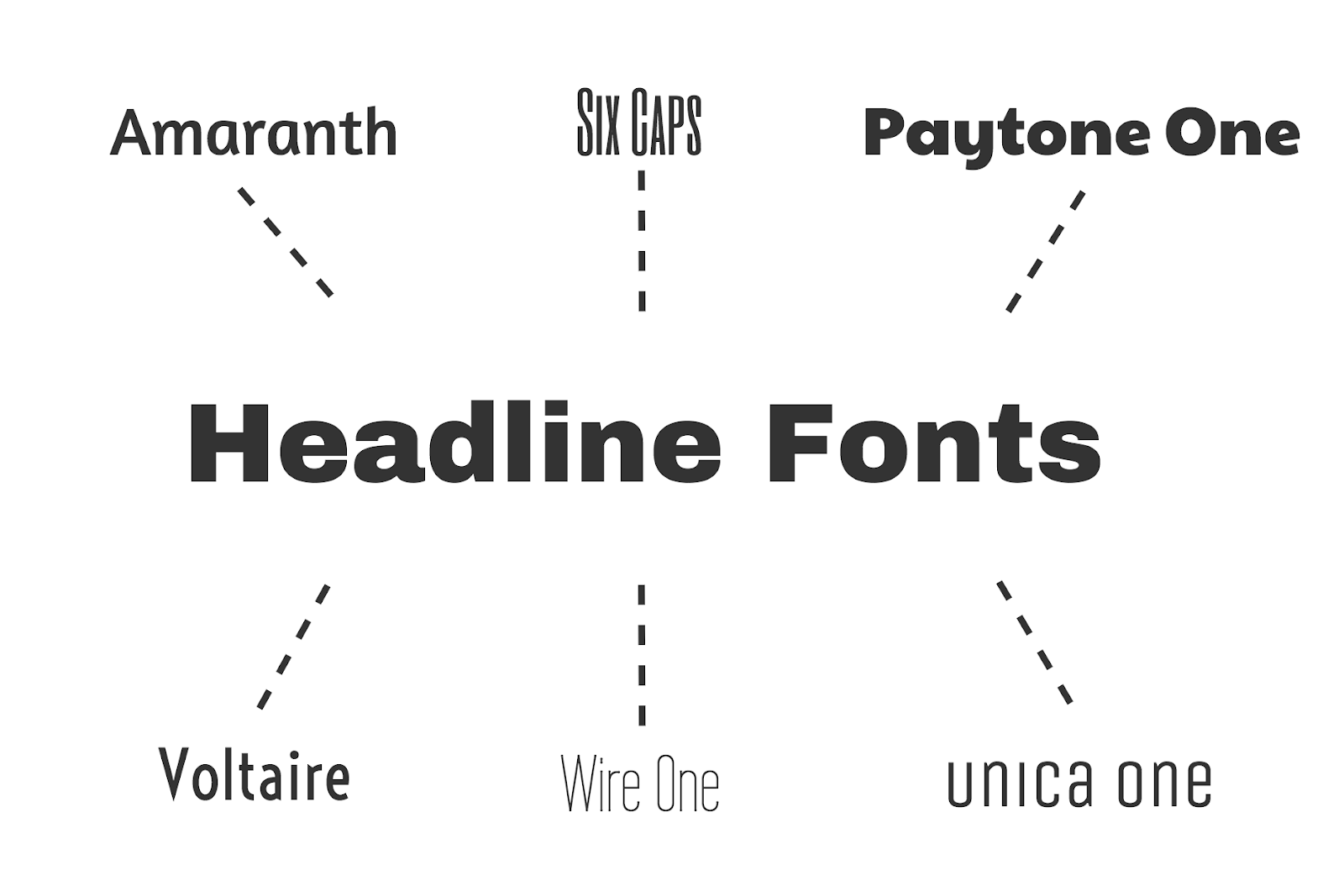
When should you use headline fonts?

Script Fonts

When should yous use script fonts?


Pick Fonts That Fit Your Make


Originally published Nov 20, 2017 six:00:00 AM, updated July 12 2019
Source: https://blog.hubspot.com/marketing/most-popular-fonts-in-america
0 Response to "What Font Was Used for Make America Great Again"
Post a Comment