Soju is becoming more popular in Singapore, thanks to the Korean wave
Advertisement
Experiences
Soju is becoming more popular in Singapore, thanks to the Korean wave
With the growth of Korean dining and Grand-pop culture in Singapore, the Korean spirit has been gaining popularity among drinkers here.
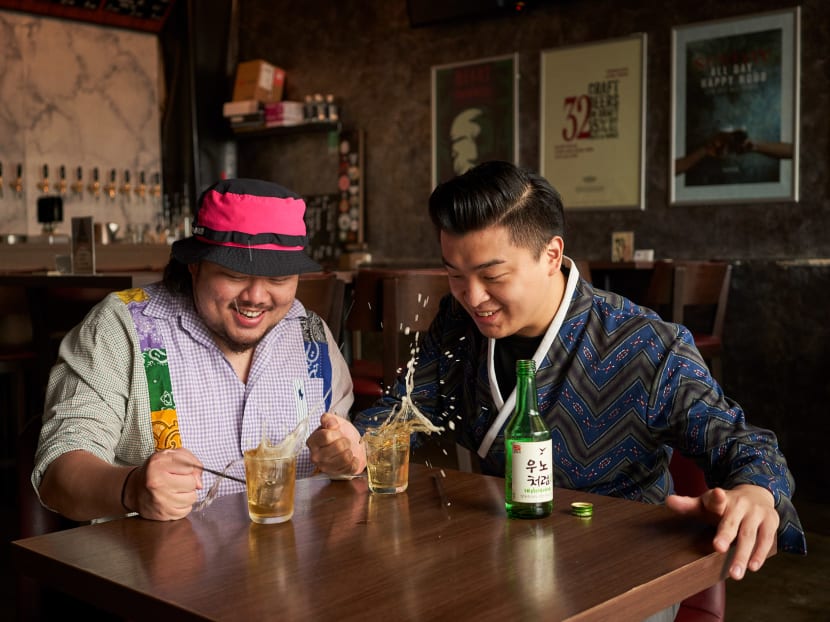
Bartender Uno Jang (right) of Jigger & Pony shows how to make a Soju Bomb. (Photo: Jigger & Pony)
xiii Aug 2022 06:30AM (Updated: xiii Aug 2022 06:30AM)
Soju, the quintessential Korean spirit, had a much later beginning than Japanese sake in Singapore'southward F&B scene. The spirit only began to brand its presence felt hither in recent years, thanks to the Korean diaspora, the growth of Korean eateries, and the smash of K-popular civilisation. On the large screen, information technology was almost notably seen in the Oscar-winning Due south Korean pic, Parasite.
Jinro, which is produced past HiteJinro, South Korea'southward largest manufacturer of soju, is the nigh pop brand in Korean restaurants and bars hither. You can notice Jinro's soju variants in major supermarkets similar Cold Storage and FairPrice, likewise.
For the uninitiated, soju is a colourless spirit distilled from starches like potatoes or sweetness potatoes – it was traditionally distilled from grains similar rice, barley, or wheat.

Soju is sometimes confused with the Japanese shochu, although people who make such a fault aren't far off the mark. Apart from stricter product rules for shochu, both spirits are basically the same: They are distilled from the same kind of ingredients, and their names in hanja and kanji – the Korean and Japanese scripts for Chinese characters respectively – mean "burned alcohol", a reference to the distillation method.
Shochu's 25 percent alcohol by volume (ABV) is mostly college than its Korean counterpart, which commonly hovers between xvi percentage ABV and 24 pct ABV for popular brands such as those from Jinro, although it'southward not rare to find premium sojus with 45 per cent ABV.
Should soju merely exist drunk swell? Tin can yous turn it into a cocktail? Tin can it exist paired with food? We talk to soju purveyors to find out what yous need to know almost enjoying the spirit.
YOU DON'T HAVE TO Drink It NEAT
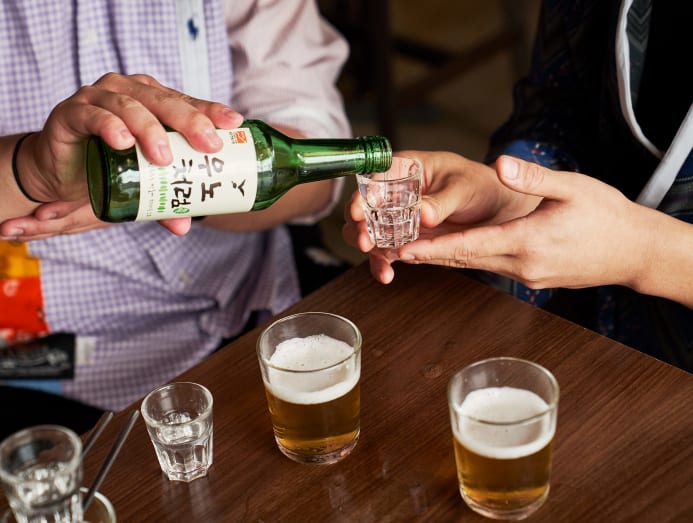
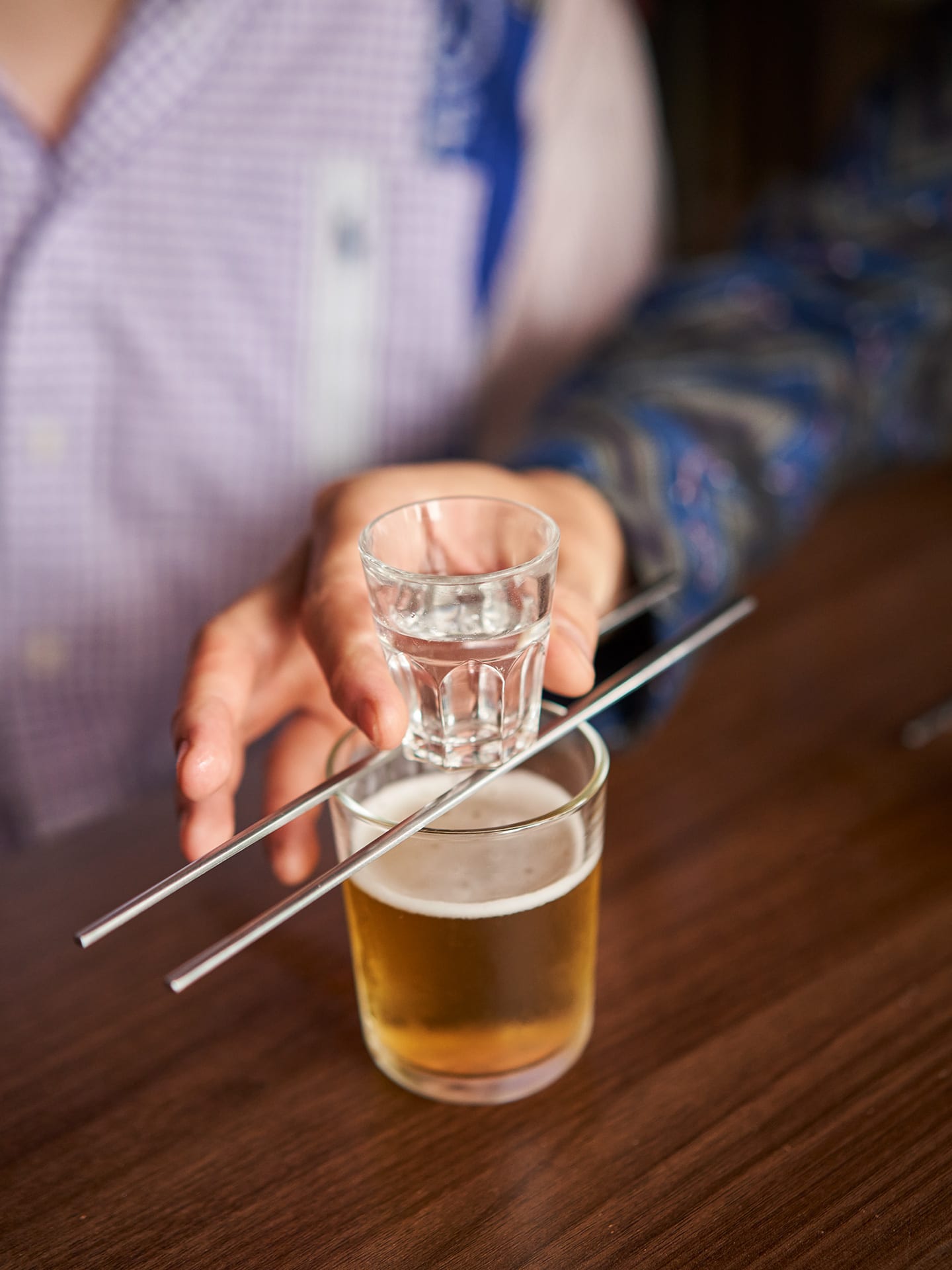
Sojus are ordinarily drunk swell, but they can also be turned into cocktails, such as somaek or Soju Bomb, a batter of soju and beer.
"Nigh Koreans were first taught how to drink soju or other Korean spirits past their parents at home," said Uno Jang, a S Korean and principal bartender of Jigger & Pony. "Most people drank it as shots during that time, simply since and so at that place accept been some changes in drinking habits equally people began drinking soju with mixers like beer, tonic, or soda. Others beverage Coke on the side as a attorney."
Kristin Lim, co-owner of modern Korean eating place Joo Bar in Bugis, noted that flavoured sojus, which entered the market here in 2015, helped heave the popularity of the spirit amongst her diners.
"Many customers started drinking more fruit-flavoured sojus as they were slightly lower in ABV, sweeter, and – to some drinkers – more palatable on their own," said Lim, who opened her establishment in 2014. She carries Jinro'due south sojus and also offers Yakult-soju, which has "a tangy taste and goes perfectly with just about anything".

Not ALL SOJUS TASTE ROUGH
Jang likened the taste of soju to vodka. "Both are usually made from grains, and the liquid is clear and smooth. They are also all-time consumed cold," he said.
Lim said many Korean dramas featured scenes of actors drinking soju while making "that feature throaty audio as they downwards a drinking glass".
"Somehow this seemed to requite the impression of soju every bit a very stiff-tasting drink with a bit of a rough cease," she added. "The general tasting notes for soju are actually clean and mild, with some sweet notes. If y'all stick with the well-known brands like Jinro, you tin can't go wrong."
Leonard Tan, director of Amber Nectar, the sole benefactor of Jinro in Singapore, noted that Jinro has adult a patented bamboo filtration technology that filters its soju 4 times – the Chamisul Fresh is 1 such product – which removes odours and other impurities.
"Notably, we noticed an increasing appreciation of unflavoured sojus like Chamisul Fresh and Jinro is Back [the original Jinro soju showtime introduced in 1924, now presented in a articulate blue bottle] among consumers," he said.
SOJU DISTILLED FROM STARCHES IS NOT Junior
Traditionally, soju was distilled from rice grains but a rice shortage in the 1960s prompted the South Korean government to ban the use of rice for alcohol product. Soju producers then switched to using starches. Although the ban was lifted in 1999, many mod soju producers continued using the alternative ingredients, which are also cheaper than rice grains.
"Soju drinkers accept gotten used to the spirit produced [with starches]," said Tan. "Hence using a mix of starches to make soju has become the new normal today."
Jang highlighted that sojus made from ingredients other than rice are non inferior.
"[The ingredient used] is besides dependent on the history of soju production in relation to its geographical location. Some regions in South korea are non suitable for rice cultivation, so they make soju with other ingredients like millet, sorghum, or sweet potato," said Jang. "I believe they are just different, not incorrect or junior."
SOJU WORKS BEST WITH GRILLED MEATS
Soju is frequently coupled with Korean BBQ. Lim said: "Soju pairs well with pork abdomen and grilled meats in general. It's traditionally been known to cut through grease and oil very well, so much so that they even use leftover soju to wipe downward the oily tables in Korean BBQ restaurants." Somaek or soju with beer is perfect when drunkard with crispy fried craven, she added.
Tan said the unflavoured Chamisul Fresh is versatile enough to exist paired with local dishes like sambal stingray, satay, and BBQ craven wings.
Pairing food with soju is pretty much a casual matter – in that location's no need to put on your sommelier cap.
Jang noted that Korean cuisine is usually served as a set, and non a multi-course, meal. Thus, multiple food and alcohol pairings aren't needed. "All the dishes are served at the aforementioned time except desserts," he said. "People commonly pair their set repast with one type of Korean spirit or wine. They by and large do not drink different types of spirits or wines at a meal, dissimilar in French cuisine."
FINISH YOUR Outset SHOT IN ONE Get
If you want to impress your Korean friends, especially your business organisation partners, yous'd do well to observe the drinking rules of soju.
Those familiar with the etiquette of drinking Japanese sake would know that you should never pour your ain drinkable but allow a companion do it. Ditto for soju.
According to Tan, the oldest person in the group should cascade the first shot of soju into everyone'southward glasses, subsequently which another member of the group should pour a shot for the server. You should also use both easily when pouring or receiving a drinking glass every bit a sign of respect.
"The showtime shot of soju should always exist downed in one become, but information technology'due south acceptable to sip [the subsequent shot]," said Tan. "[When drinking with seniors], ane should turn his head and avoid middle contact, besides every bit cover his oral cavity when drinking to show greater regard for the elders."

Contempo Searches
Trending Topics
Source: https://cnalifestyle.channelnewsasia.com/experiences/where-drink-soju-singapore-275321
0 Response to "Soju is becoming more popular in Singapore, thanks to the Korean wave"
Post a Comment